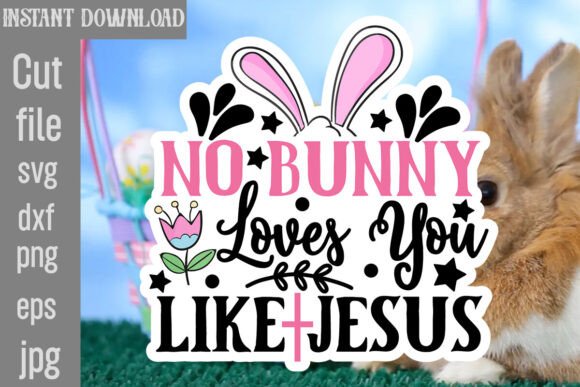
No Bunny Loves You Like Jesus SVG Cut Fi
When I review a new design file, I am rarely looking for just "cute." As an embroidery designer and reviewer, I am looking for viability. Can this design hold up in production? Does it translate well from vector to thread? Is there enough visual weight to justify the labor involved in stitching it out? Today, I am putting No Bunny Loves You Like Jesus SVG Cut Fi under that same microscope. This is not just another holiday graphic; it is a piece of digital assets that sits at the intersection of faith-based sentimentality and seasonal craft trends.
The market for personalized gifts is saturated, but the niche for meaningful, handcrafted items remains strong. Whether you are an Etsy seller, a small shop owner, or a creative entrepreneur looking to expand your catalog, the question is always: does this design have legs? Does it feel professional? Here is my practical evaluation of how this design performs when moving from screen to hoop.
First Impressions: Mood and Visual Personality
The moment you open the download package—which conveniently includes one .zip file with an SVG, DXF, EPS, and a 300 Dpi PNG transparent background—the mood is immediately established. The title alone carries significant emotional weight. It taps into the dual popularity of Easter imagery and religious devotion. Visually, these types of designs usually rely on clean lines and clear hierarchy. If the bunny silhouette is too thin or the text kerning is off, the entire piece falls apart once stitched.
In my experience, successful machine embroidery design relies on simplicity. Complex gradients do not exist in thread; they must be simulated through fill stitches or left to the imagination. A design like No Bunny Loves You Like Jesus SVG Cut Fi works because it likely leverages bold shapes. The "bunny" element suggests softness and approachability, while the textual message grounds it in seriousness. This contrast is excellent for branding. It allows a boutique to sell a product that feels both festive and faithful, appealing to a demographic that values tradition without sacrificing modern aesthetic sensibilities.
Real-World Application: From Concept to Finished Product
Let’s talk about where this design actually lives. I recently considered using a similar layout for a custom embroidered tote bag intended as a gift for a church group leader. The challenge with tote bags is fabric texture. Canvas is thick, uneven, and unforgiving. A delicate line art style might get lost or pucker. However, if this design utilizes strong outlines and substantial fill areas, it becomes a powerful statement piece.
Imagine this on a high-quality cotton sweatshirt for a baby item or nursery decor project. The combination of a soft pastel background with a contrasting thread color can make the design pop. For small business merchandise, versatility is key. This design is not limited to apparel. It translates beautifully to kitchen towels, aprons, and pillow covers. These are high-volume items for craft fairs and online markets. A customer browsing an Etsy listing is often drawn to products that tell a story. This design tells a story of love and care, which increases perceived value.
Furthermore, the inclusion of vector files (SVG, DXF, EPS) means this isn't just for embroidery machines. It opens doors for heat transfer vinyl (HTV) projects on caps or hats, expanding your craft business offerings. If you are a digital product seller, the 300 Dpi PNG is perfect for creating printable mockups to showcase your physical products before you even stitch them. This efficiency is crucial for Etsy sellers who need to list multiple variations quickly.
Technical Considerations and Stitch Clarity
While the concept is strong, the execution in thread requires careful planning. When evaluating any embroidery file, I always look at the potential stitch density. Designs featuring text alongside illustrations can become cluttered if the font is too intricate. If the lettering in No Bunny Loves You Like Jesus SVG Cut Fi contains fine serifs or tiny crossbars, those details may merge together during stitching, resulting in a muddy appearance.
I recommend testing the design on scrap fabric first. Pay close attention to the transition between the bunny shape and the text. Are there areas where the stabilizer needs to be heavier? For instance, if you are embroidering on a stretchy fabric like a jersey knit cap, you will need cut-away stabilizer to prevent distortion. Conversely, on a woven tea towel, tear-away might suffice, but you must ensure the backing doesn't show through the fabric weave.
Thread color selection is equally critical. The visual appeal of the final product depends heavily on contrast. On dark fabric, light threads can look washed out unless you use a high-density underlay or a specific thread type designed for dark backgrounds. On light fabric, white-on-white is risky unless you use a metallic or textured thread to catch the light. Always inspect small details by viewing your design in black and white mockups. This removes the distraction of color and forces you to evaluate the structural integrity of the shapes.
Where to Use With Caution
Not every surface is created equal. There are specific scenarios where this design might struggle:
- Small Hoop Sizes: If the design dimensions exceed your machine's maximum hoop size, you will need to split the design. Splitting text can ruin the readability of the phrase. Check the file dimensions before committing to a small project like a wristband or a tiny patch.
- Textured Fabrics: Burlap, heavy tweeds, or looped towels can hide fine details. The needle penetration might be difficult, and the thread could snag. Save this design for smoother surfaces like denim, cotton blends, or smooth polyester.
- Curved Surfaces: Embroidering directly onto a curved baseball cap requires a specialized hoop and technique. If the design has straight horizontal lines, they may appear warped on a curved brim. Test this thoroughly before attempting a commercial run.
- Frequent Washing: If this is for a handmade product that will be washed regularly, such as a baby blanket or apron, ensure the stitch density is high enough to withstand friction. Loose satin stitches can fray over time.
Impact on Brand Consistency and Customer Trust
In the world of custom apparel and personalized gifts, professionalism is everything. A sloppy stitch job or a poorly scaled design can damage your reputation instantly. Using a well-structured vector file like No Bunny Loves You Like Jesus SVG Cut Fi helps maintain consistency across all your products. Because the source files are vector-based, you can scale the design up or down without losing quality, ensuring that a logo on a hat looks identical to the same image on a tote bag.
This consistency builds trust. Customers recognize a brand that delivers uniform quality. When a buyer sees that your embroidered patch or sweatshirt embroidery is crisp, aligned, and visually balanced, they are more likely to leave a positive review and return for future purchases. The emotional resonance of the message also plays a role; buyers are investing in the sentiment, not just the fabric. They want to feel that the giver cared enough to choose something meaningful. This design facilitates that connection.
Practical Designer Notes for Success
To get the most out of this design, follow these steps before starting your production run:
- Confirm Licensing: Before selling finished items or digital products, verify the license terms provided by the creator. Commercial rights vary, and assuming permission can lead to legal issues.
- Test Thread Colors: Lay out your chosen thread colors against the actual fabric you plan to use. Screen colors differ significantly from thread sheen.
- Check Hoop Size: Ensure the design fits comfortably within your machine’s hoop, leaving room for maneuvering if necessary.
- Review Stitch Types: Identify where satin stitch, fill stitch, and running stitch are used. Satin stitches should be narrow enough to avoid ridges; fill stitches should cover the fabric completely without showing gaps.
- Inspect Corners: Look at the corners of the bunny ears or any sharp angles in the text. These are common points of breakage or puckering.
Ultimately, No Bunny Loves You Like Jesus SVG Cut Fi is a versatile tool for the modern maker. It bridges the gap between traditional holiday crafts and contemporary faith-based design. By approaching it with technical diligence—testing fabrics, managing stitch density, and respecting licensing—you can transform this digital file into a tangible, high-value finished product. Whether you are decorating a nursery, stocking a boutique shelf, or creating a heartfelt personalized gift, this design offers a solid foundation for creativity and commerce.