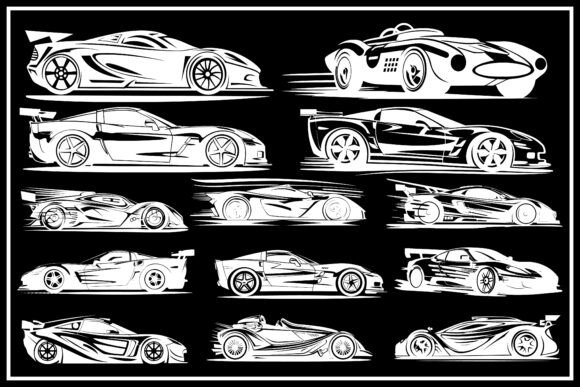
Reviewing Ultimate High-Speed Dreams for Embroidery
As a designer who spends half my day staring at stitch paths and the other half worrying about thread tension, I don’t just look at an embroidery file; I look at its potential. When I first pulled up Ultimate High-Speed Dreams, I wasn’t looking for something cute or generic. I was looking for something with presence. This design falls squarely into the Crafts category under Graphics, but in the world of machine embroidery, "graphics" can often mean flat, lifeless shapes if not handled correctly. Fortunately, this design carries a specific energy that suggests it was built with motion in mind.
The theme is unmistakable: racing cars, sports cars, and high-performance vehicles. It appeals directly to car enthusiasts and those who appreciate aerodynamic shapes. But here is the thing about automotive designs—they are tricky. They require clean lines, sharp angles, and a sense of speed that doesn’t get lost in a mess of fill stitches. My initial impression of Ultimate High-Speed Dreams is that it understands this balance. The visual personality feels aggressive yet polished, which is exactly what you want when you are trying to sell a finished product to someone who loves their truck or their sedan.
Real-World Application: From Screen to Stitch
Let’s talk about how this actually looks on fabric. I recently had a scenario where a client wanted a custom embroidered patch for a vintage leather jacket she was restoring. She wanted something that screamed "high performance" without being too childish. I put Ultimate High-Speed Dreams into my digitizing software and mocked it up on a textured denim background. The result was immediate clarity. The aerodynamic shapes translated well, provided the stitch density was managed correctly.
This design is versatile enough to work across a wide range of products. For the Etsy seller or small shop owner, this is gold. Imagine a sweatshirt embroidery project featuring this design centered on the chest of a heavyweight hoodie. Or perhaps a tote bag design placed prominently on a canvas bag for a gearhead heading to a track day. It also works beautifully as a baby embroidery piece for a onesie or a nursery decor item, though you would likely need to scale it down and adjust the thread colors to be softer—think pastel blues and greys instead of bright reds and blacks.
I also envision this as a strong candidate for holiday embroidery gifts. A personalized gift for a husband or father who loves classic muscle cars? This design hits the mark. It has that recognition factor that makes a buyer feel understood. When a customer sees a design that captures the essence of their hobby, they trust the maker more. It elevates the handmade product from a simple craft fair product to a boutique branding item.
Where to Be Careful: Technical Considerations
Even the best digital embroidery file needs respect. While Ultimate High-Speed Dreams is robust, there are places where you should hold back. Do not attempt to run this through a tiny hoop size. Automotive designs often have horizontal spans that exceed standard 4x4 hoops, and if you try to cram it, you will lose the detail in the corners. Always confirm the hoop size requirements before you start stitching.
Fabric choice is equally critical. This design relies on contrast. If you are working with dark fabric, ensure your thread colors pop. Conversely, if you use thin or stretchy fabric, the stabilizer becomes your best friend. You need a proper stabilizer to prevent puckering, especially since high-speed designs often imply movement, which can translate to denser stitch areas in certain parts of the graphic. Avoid using this on curved surfaces like caps unless you have a cap frame and experience, as the straight lines of the car illustration might distort if the tension isn't perfect.
Also, consider the end-use. If this is going on a kitchen towel or tea towels that will see frequent washing, make sure the design isn't so dense that it traps moisture or wears out quickly. For commercial embroidery projects where volume is key, inspect small details closely. Sometimes, vector graphics look great on screen but turn into muddy blobs when stitched in satin stitch. Test the design in black and white mockups to check the silhouette integrity before committing to expensive threads.
Design Notes for the Pro Maker
If you are planning to use Ultimate High-Speed Dreams for a custom apparel line or a series of embroidered patches, here is my practical advice. First, test the design on scrap fabric that matches your final material. This is non-negotiable. You need to see how the stitch density behaves on that specific weave.
Second, think about your thread colors. The design assets provided usually come in a default palette, but don't be afraid to tweak them. For a more subtle look, try monochromatic threads. For a bold statement, go high contrast. If you are creating a printable mockup for your online store, show the design on different backgrounds—a light grey t-shirt, a navy blue cap, a white apron—to help customers visualize the versatility.
Finally, always check the licensing. Even though this is a digital embroidery file, the rights to sell finished items vary by creator. Confirm whether you have permission for commercial use before you list these on Etsy or your own website. This protects your craft business and ensures you aren't infringing on anyone's intellectual property.
Final Verdict
Ultimate High-Speed Dreams is a solid addition to any designer’s library. It bridges the gap between a simple graphic and a complex machine embroidery design. It offers clarity, style, and a clear target audience. Whether you are making personalized gifts for friends or building a brand around automotive-themed merchandise, this design delivers. Just remember: good digitizing is about more than just the file; it’s about understanding the fabric, the hoop, and the human behind the needle. Use this design wisely, test thoroughly, and you will have a finished product that drives sales.