I Am a Carpenter SVG Review
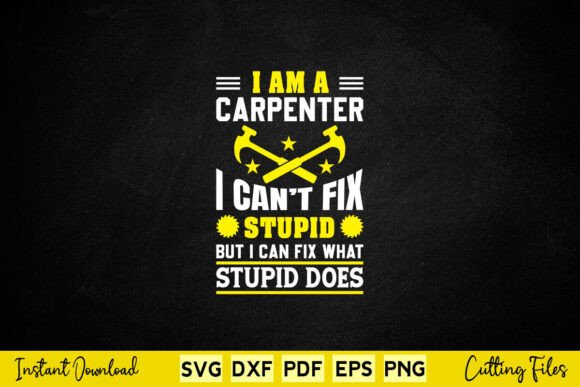
When I pull a new design file into my embroidery software, I am rarely impressed by the preview alone. As a designer who spends hours digitizing and testing stitches for real-world applications, I know that what looks good on a screen often behaves very differently under the needle. Recently, I evaluated I Am a Carpenter I Can t Fix Stupid Svg, a graphic that leans heavily into humor and trade pride. While it is marketed broadly for printing on mugs and stickers, my focus here is strictly on its viability as an embroidery project. For craft business owners, Etsy sellers, and handmade makers, understanding how this specific layout translates from vector to thread is crucial before you commit to production.
First Impressions and Visual Personality
The immediate mood of I Am a Carpenter I Can t Fix Stupid Svg is bold, unapologetic, and text-forward. In the world of machine embroidery design, text-heavy graphics are a double-edged sword. They offer instant recognition but demand precise digitization to remain legible after stitching. This design creates a strong visual personality that feels at home in blue-collar aesthetics or humorous gift culture. It does not rely on subtle gradients or delicate florals; instead, it commands attention through direct messaging and likely strong, blocky typography.
For a small shop product or boutique branding item, this kind of high-contrast attitude works well. It signals a clear target audience: people who appreciate trades, humor, and straightforward design. When I look at the layout, I am thinking about where this would sit on a finished product. It feels too aggressive for a delicate baby onesie unless scaled down significantly, but it has excellent potential for adult apparel, workwear accessories, or casual home decor items like kitchen towels and aprons. The graphic nature suggests it belongs in the Crafts category as a fun, accessible piece for hobbyists and commercial designers alike.
Real-World Embroidery Scenarios
To truly understand the value of this design asset, we have to move beyond the digital mockup and imagine it stitched onto physical materials. Let us consider a few practical scenarios where I Am a Carpenter I Can t Fix Stupid Svg might shine.
Imagine preparing a custom embroidered tote bag for a carpenter’s apprentice. A canvas tote provides a sturdy, flat surface that can handle the tension of dense stitching. Here, the design could be placed centrally on the front panel. The humor adds a personal touch that makes the personalized gift feel unique rather than mass-produced. Alternatively, think about sweatshirt embroidery. A heavyweight cotton blend hoodie offers a soft backdrop that contrasts nicely with crisp thread colors. Placing this design on the chest or back pocket area creates a statement piece that balances comfort with attitude.
Another strong use case is the embroidered patch. If you are creating merchandise for a local hardware store or a trade school graduation gift, applying this design as an iron-on or sew-on patch adds a professional finish. The durability of the embroidery ensures that the message survives frequent washing and rough handling, which is essential for items associated with manual labor. Furthermore, for holiday embroidery projects, this design fits perfectly into end-of-year gifts for dads, partners, or friends who take pride in their DIY skills. It transforms a standard commodity into a memorable keepsake.
Apparel and Decor Applications
- Custom Apparel: T-shirts and polo shirts benefit from the clean lines of this graphic. Ensure you use a cut-away stabilizer to prevent puckering on stretchy knits.
- Home Decor: Pillow covers and tea towels are excellent candidates. The design’s boldness stands up well against busy fabric textures common in kitchens and living rooms.
- Accessories: Caps and hats require careful placement. Due to the curved surface, large text designs can distort if not digitized with proper curvature compensation.
Where Caution Is Required
Not every surface is friendly to every design, and I Am a Carpenter I Can t Fix Stupid Svg has specific limitations that every embroiderer must respect. Small hoop sizes are the first hurdle. If the text is intricate or the font weight is thin, shrinking the design too much will result in a muddy stitch pattern where individual letters merge together. Always check the minimum stitch size requirements before scaling down.
Fabric texture also plays a major role. On highly textured fabrics like burlap or heavy tweed, the design may get lost visually. Thin or stretchy fabrics pose a risk of distortion if the stitch density is too high. You must use the correct stabilizer—tear-away for stable wovens, cut-away for knits—to maintain structural integrity. Dark fabrics present a contrast challenge; ensure your thread colors are bright enough to pop against the background without requiring excessive underlay stitches that could stiffen the fabric.
Detailed corners and tiny lettering are areas where many designs fail. If the original graphic contains sharp serifs or very small secondary text, these elements may not render clearly after stitching. Dense stitch areas can lead to bulkiness, making the finished product uncomfortable to wear. Before committing to a full run, test the design on scrap fabric that matches your final material. This step saves time and prevents customer dissatisfaction due to quality issues.
Impact on Product Value and Brand Trust
Using a well-executed design like I Am a Carpenter I Can t Fix Stupid Svg directly influences buyer engagement and perceived professionalism. Customers associate neat, precise embroidery with quality craftsmanship. When a handmade product features clear, legible text and consistent thread tension, it builds trust. Conversely, sloppy stitching or misaligned text can undermine even the best concept.
From a marketing perspective, this design offers high recognition value. The humorous quote is relatable and shareable, which can boost social media engagement for your printable mockups and Etsy listings. It appeals to a niche market that values authenticity and humor, helping your brand stand out in a crowded marketplace. However, remember that the design itself is only half the equation; your presentation, packaging, and customer service complete the experience.
Practical Designer Notes for Success
To ensure the best results when using this embroidery file, follow these essential steps:
- Test on Scrap Fabric: Never skip this step. It reveals how the design interacts with different thread colors and fabric types.
- Check Thread Color Contrast: Use black and white mockups to verify visibility. Bright threads often perform better on dark backgrounds.
- Review Stitch Density: Ensure the design is not too dense for the chosen fabric, which can cause needle breakage or fabric damage.
- Confirm Hoop Size: Verify that the design dimensions fit comfortably within your machine’s maximum hoop size.
- Inspect Small Details: Zoom in on the digitization to check for any weak points in satin stitches or running stitches.
- Compare Backgrounds: Test the design on both light and dark fabrics to see how it adapts to different aesthetics.
- Use Proper Stabilizer: Match the stabilizer type to the fabric weight and stretch to prevent distortion.
- Verify Licensing: Before selling finished items or digital products, confirm the commercial usage rights of the design assets.
By approaching I Am a Carpenter I Can t Fix Stupid Svg with these practical considerations, you transform a simple graphic into a profitable, high-quality embroidery project. Whether you are crafting a one-off gift or building a line of small shop products, thoughtful execution is what separates amateur attempts from professional-grade handmade goods. Take the time to plan, test, and refine, and you will find that this design has significant potential in the right hands.