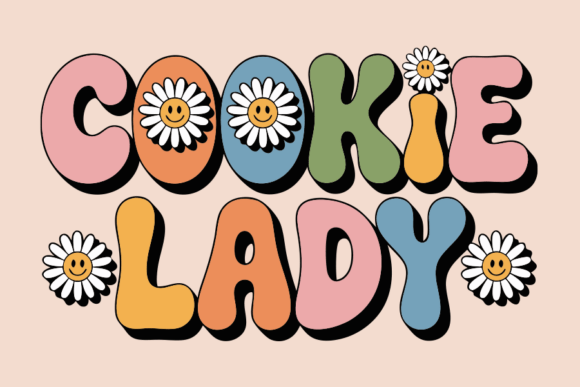
Cookie Lady Retro Groovy Flower Power
When I first opened the file for Cookie Lady Retro Groovy Flower Power, my immediate reaction was a mix of nostalgia and practical caution. As an embroidery designer who spends half my life troubleshooting stitch errors and the other half trying to make handmade products look professional, I don’t just look at a design’s aesthetic; I look at its viability. This piece is undeniably vibrant. It captures that specific late-sixties, flower-power energy with a typography-driven layout that feels both playful and bold. But does it translate well from a digital graphic on a screen to a tangible, stitched product? That is the question every Etsy seller, small business owner, and craft enthusiast needs to answer before hitting the "start" button on their machine.
The First Impression: Mood and Visual Personality
The core appeal of this machine embroidery design lies in its retro groovy aesthetic. The illustration features a stylized cookie lady surrounded by colorful flowers, creating a composition that is inherently cheerful and eye-catching. For a craft business looking to stand out at a local fair or on a crowded marketplace like Etsy, this kind of personality is gold. It doesn’t feel generic; it has character.
Visually, the design relies heavily on strong shapes and contrasting colors. The typography isn't just an afterthought; it’s integrated into the floral elements, suggesting that the lettering will need careful handling during digitization. If the letters are rendered with too much detail or thin lines, they may disappear into the fabric texture. However, if executed correctly, the boldness of the font paired with the organic flow of the flowers creates a balanced visual weight. It screams "summer," "festival," and "handmade joy." This makes it an excellent candidate for custom apparel that aims to evoke a sense of fun and individuality.
Real-World Application: Where This Design Shines
I recently considered using Cookie Lady Retro Groovy Flower Power for a batch of custom tote bags intended as boutique gifts. Here is why it works so well for that specific use case:
- Tote Bag Embroidery: Canvas totes provide a sturdy, flat surface that can handle the density of a busy design like this. The retro theme fits perfectly with the eco-friendly, artisanal vibe of tote bag culture.
- Sweatshirt Embroidery: For fall collections, a lighter colorway of this design on a heather grey sweatshirt could be a hit. The floral elements soften the retro typography, making it wearable rather than costume-like.
- Baby Embroidery: Believe it or not, the soft curves of the flowers and the whimsical cookie character translate surprisingly well to baby clothes. When scaled down appropriately, it becomes a sweet, unique gift for new parents who appreciate indie aesthetics over mass-produced nursery decor.
- Kitchen Towels and Aprons: The "cookie" theme naturally lends itself to kitchen items. An embroidered apron featuring this design adds a touch of humor and charm to a functional item, increasing its perceived value as a personalized gift.
In these scenarios, the design acts as a conversation starter. Customers don’t just buy a tote bag; they buy the vibe. The embroidery project becomes a statement piece that reflects the wearer’s taste in vintage-inspired art.
Technical Challenges and Where to Be Careful
However, enthusiasm shouldn’t blind us to technical realities. Not every surface is created equal, and Cookie Lady Retro Groovy Flower Power has specific requirements that must be met to avoid a frustrating outcome.
Fabric Texture and Stability
This design likely contains a mix of satin stitch for outlines and text, and fill stitch for the flower petals. On highly textured fabrics, such as heavy boucle wool or loose-weave burlap, the needle may struggle to penetrate consistently, leading to skipped stitches or puckering. Always test on scrap fabric first. If you are working with thin or stretchy fabrics, such as lightweight jersey or silk blends, you must use a proper stabilizer. A cut-away stabilizer is often necessary for garments that will undergo frequent washing, ensuring the stitch density doesn’t distort the fabric over time.
Hoop Size and Placement
The layout of Cookie Lady Retro Groovy Flower Power suggests a medium-to-large footprint. Trying to cram this into a tiny hoop size will result in cramped details where the flowers merge into a blurry blob. Conversely, placing it on curved surfaces like caps or hats requires precise digitizing adjustments. If the design isn’t properly warped to follow the curve of the cap front, the text may appear distorted, breaking the illusion of quality. For embroidered patches, ensure the border is clean and dense enough to prevent fraying when trimmed.
Thread Color Contrast
The strength of this design is its color. On dark fabric, you will need underlay stitches to make the bright flower colors pop. If you skip the underlay, the colors may look muddy or dull against the dark background. Similarly, on light fabrics, ensure the thread colors chosen have enough contrast against the base material. A pastel pink flower on a white tee might get lost; a deeper rose or coral would maintain the visual impact.
Impact on Product Value and Brand Consistency
From a business perspective, using a distinct design like this can elevate your small shop product line. Generic clipart designs are everywhere, but a cohesive, thematic collection builds brand recognition. If you are selling design assets or finished goods, consistency is key. Using Cookie Lady Retro Groovy Flower Power as part of a larger "Retro Summer" or "Groovy Garden" collection helps tell a story.
Customers trust brands that pay attention to detail. A cleanly stitched, well-placed design signals professionalism. It shows that you care about the final presentation. When a buyer sees a high-quality finished product with sharp edges and vibrant colors, their confidence in your craftsmanship increases. This translates directly to better reviews, repeat customers, and higher price points. In the world of commercial embroidery, quality is the differentiator between a commodity and a desirable item.
Practical Designer Notes for Success
Before you commit to a full production run, here is my checklist for evaluating any digital embroidery file:
- Black and White Mockup: Convert the design to black and white. Does the shape still read clearly? If the design relies solely on color to define its form, it may lack structural integrity when stitched.
- Stitch Density Check: Look closely at the areas where flowers overlap the text. Is there too much density? Excessive layers of thread can cause the fabric to pucker or the needle to break. If the density seems high, consider reducing the number of passes or simplifying the fill pattern.
- Small Details Inspection: Zoom in on the smallest elements. Are they too fine to be stitched reliably? Tiny running stitches often unravel or become invisible. If details are too small, advise your client to adjust expectations or simplify the design.
- Licensing Confirmation: This is critical for Etsy sellers and craft business owners. Ensure you have the correct commercial license to sell finished items made from this design. Some licenses allow personal use only, while others permit unlimited commercial sales. Never assume; always read the terms.
- Stabilizer Selection: Match the stabilizer to the fabric. Heavy-duty tear-away for stable cottons, cut-away for knits and stretch fabrics. Using the wrong stabilizer is the most common cause of poor results in home embroidery.
Ultimately, Cookie Lady Retro Groovy Flower Power is a charming, versatile design with strong commercial potential. It offers a perfect blend of retro flair and modern appeal, suitable for a wide range of embroidery projects. By paying attention to fabric choice, stabilizer support, and stitching precision, you can transform this digital graphic into a stunning physical product that delights customers and elevates your brand. Just remember: good design starts with good preparation. Test thoroughly, plan carefully, and let your creativity shine through every stitch.